
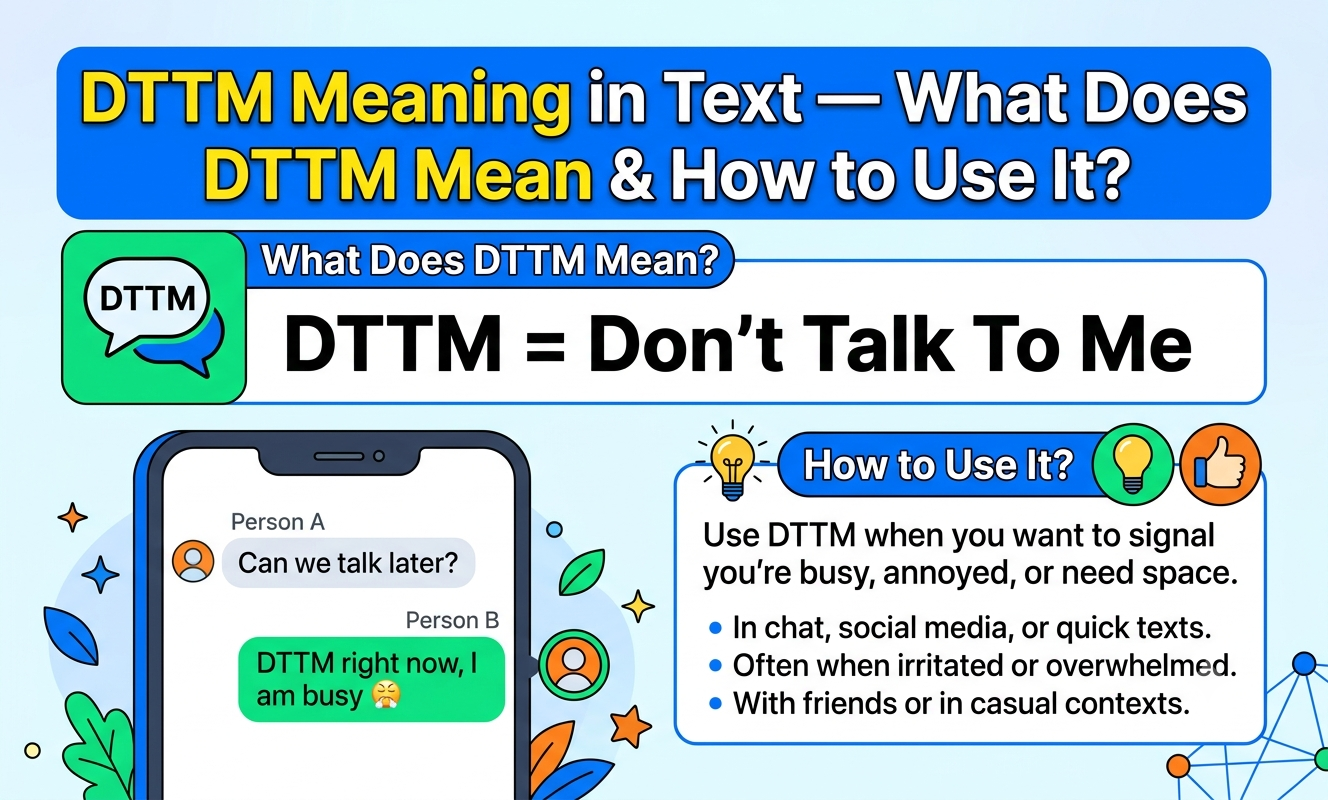
Quick Answer: DTTM stands for “Don’t Talk To Me.” It’s a texting acronym people use when they want space, are annoyed, overwhelmed, or just not in the mood to chat. It can be playful among friends or serious when someone genuinely needs alone time.
Introduction
Ever gotten a text back that just said “DTTM” and had no clue what it meant? You’re not alone. DTTM meaning in text is one of those acronyms that shows up constantly in group chats, Snapchat replies, and comment sections, yet most parents (and even some teens) have to look it up the first time they see it.
In this guide, you’ll learn exactly what DTTM stands for, where it came from, how it’s used across WhatsApp, Snapchat, TikTok, and Instagram in 2026, whether it’s considered rude, and how to reply if someone sends it to you. We’ll also cover similar slang terms so you’re never caught off guard again.
What Does DTTM Mean?
DTTM stands for “Don’t Talk To Me.” It’s a short, blunt way of telling someone — usually a friend, sibling, or classmate — that you’re not in the mood for conversation right now.
The phrase isn’t new as a sentiment, but its acronym form gained real traction on messaging apps and social platforms as texting shorthand became second nature for younger users. By 2026, DTTM has become one of the more recognizable “mood” acronyms alongside terms like IDGAF, LMK, and NVM, largely because it captures a very specific, relatable feeling: needing space without writing a whole paragraph about it.
Unlike acronyms that describe actions (like BRB or TTYL), DTTM communicates an emotional boundary. That’s part of why it spread so fast — it’s short, direct, and instantly understood by anyone who grew up texting in shorthand.
It’s worth noting that DTTM is also used in professional and government contexts to mean things like “date/time” fields in databases or transport authority names in some countries. But in texting and social slang, the overwhelming meaning is “Don’t Talk To Me.”
DTTM Full Form Explained
Here’s a simple breakdown of the acronym, letter by letter:
| Letter | Stands For |
|---|---|
| D | Don’t |
| T | Talk |
| T | To |
| M | Me |
It’s a four-letter acronym built directly from the phrase it represents, which makes it easy to remember once you’ve seen it once or twice. There’s no hidden meaning or twist — it says exactly what it means.
How to Use DTTM — Real Examples
DTTM shows up in a range of emotional contexts, from lighthearted teasing to genuine frustration. Here are common situations where you’ll see it used:
| Situation | Example | Emotion |
|---|---|---|
| Bad day at school | “DTTM today, I failed my chem test 😩” | Frustration |
| Playful teasing between friends | “DTTM I’m trying to focus on this game lol” | Playful |
| Group chat drama | “I’m not picking sides. DTTM about it.” | Avoidance |
| Woke up tired | “DTTM before 9am I’m not a morning person” | Grumpy |
| After an argument | “DTTM right now, I need space.” | Serious/Hurt |
| Studying for exams | “DTTM I’m cramming, talk later” | Stressed |
| Annoying notifications | “DTTM about the group project, I’ll do it myself” | Irritated |
| Sarcastic reply to gossip | “Oh here we go… DTTM 🙄” | Sarcastic |
| Needing alone time after work/school | “Long day. DTTM for a bit.” | Exhausted |
| Joking response to a meme | “DTTM I’m still not over this 😂” | Humorous |
Notice how the tone shifts entirely based on punctuation, emojis, and context. “DTTM 😂” reads as a joke, while “DTTM.” with a period often signals genuine irritation.
DTTM on Different Platforms (2026)
Texting acronyms don’t behave the same way on every app. Here’s how DTTM tends to show up across the most popular platforms in 2026.
On WhatsApp
WhatsApp remains the go-to app for both casual chats and family group threads, which means DTTM shows up in two very different tones there. In sibling or friend chats, it’s usually playful. In family groups, it’s more often used seriously, especially by teens signaling they need space from constant check-ins.
On Snapchat
Snapchat’s fast, disappearing message format makes DTTM a natural fit — it’s quick to type and fits the platform’s rapid-fire chat style. It’s commonly paired with a tired or unimpressed Bitmoji reaction, reinforcing the “leave me alone for now” tone without needing extra words.
On TikTok
On TikTok, DTTM shows up less in direct messages and more in comments and captions, often used humorously. A creator might caption a video “DTTM I’m in my villain era” as a joke about needing a break from drama, turning what started as a texting acronym into a relatable caption trend.
On Instagram
Instagram usage mirrors TikTok in comments and Story replies, but it also appears in DMs between close friends. It’s frequently used with a simple thumbs-up or laughing emoji to soften the tone, especially in group DMs where being too blunt could come across as cold.
Across all four platforms, the core meaning stays consistent — the difference is mostly in tone and whether it’s public (captions/comments) or private (DMs).
Is DTTM Rude or Offensive?
This is where context matters most. DTTM isn’t inherently rude, but it can come across that way depending on how, when, and to whom it’s sent.
Why it can feel rude:
- Sent without explanation, it can feel dismissive or cold, especially to someone who wasn’t expecting a curt response.
- Used repeatedly toward the same person, it may signal you’re avoiding them entirely.
- In a formal or work-adjacent conversation, it reads as unprofessional or abrupt.
Why it’s usually not offensive:
- Among close friends, it’s often understood as shorthand for “I’m overwhelmed right now,” not a personal rejection.
- It’s frequently used humorously or self-deprecatingly, not aimed at anyone specific.
- Many teens use it as a healthy boundary-setting tool rather than a hostile one.
The safest rule of thumb: DTTM between close friends who text this way regularly is generally harmless. DTTM sent to someone you don’t know well, or during an already tense conversation, is more likely to land as dismissive.
How to Reply to DTTM
If someone sends you DTTM, how you respond depends on your relationship with them and the situation. Here are a few solid reply options:
| Reply | Tone | When to Use |
|---|---|---|
| “Okay, text me whenever you’re ready 💛” | Supportive | If they seem genuinely stressed |
| “Lol fair, talk later” | Casual | If it’s clearly a joke |
| “No worries, I’ll leave you be” | Respectful | If you want to give them space |
| “You good though?” | Caring | If you’re worried about them |
| “😂 okay okay” | Playful | If it’s teasing banter |
| “Noted. Here if you need me.” | Neutral/Kind | If you want to check in without pushing |
The key is not to push back or demand they explain themselves — that usually defeats the purpose of them setting a boundary in the first place.
DTTM Alternatives and Similar Slang
DTTM isn’t the only acronym teens use to express needing space or reacting to a mood. Here are some similar terms you might come across:
| Term | Meaning |
|---|---|
| IDGAF | I Don’t Give A F*** (indifference) |
| NVM | Never Mind |
| LMK | Let Me Know |
| DND | Do Not Disturb |
| BRB | Be Right Back |
| STFU | Shut The F*** Up (harsher, more aggressive) |
| IB | I’m Busy |
| TBH | To Be Honest |
DTTM sits somewhere between DND and IB in intensity — it’s more emotionally charged than “I’m busy,” but softer and less aggressive than terms like STFU.
Frequently Asked Questions (FAQ)
Q: What does DTTM mean in text?
A: DTTM means “Don’t Talk To Me.” It’s used to tell someone you need space or aren’t in the mood to chat right now.
Q: Is DTTM the same as DND?
A: Not exactly. DND (Do Not Disturb) is a more neutral, general status, while DTTM is more personal and emotionally driven, often reflecting a specific mood in the moment.
Q: Is it okay to use DTTM with parents?
A: It depends on the relationship and tone at home. Some families are fine with lighthearted slang, but using DTTM during a serious conversation with a parent could come across as disrespectful, so context matters.
Q: What’s the difference between DTTM and DTM?
A: DTTM means “Don’t Talk To Me,” while DTM is a separate acronym with multiple meanings depending on context, including “Doing Too Much” or “Dead To Me.” They’re easy to confuse but mean different things.
Q: Why do teens use DTTM instead of just saying they’re busy?
A: It’s faster to type, feels more expressive, and fits naturally into fast-paced chat culture on apps like Snapchat and TikTok, where short, mood-based acronyms are the norm.
Q: Can DTTM be used in a professional setting?
A: No, it’s considered casual internet slang and isn’t appropriate for work emails, school assignments, or formal messages.
Conclusion
DTTM meaning in text boils down to one simple idea: “Don’t Talk To Me.” Whether it’s used playfully between friends on Snapchat or seriously after a rough day, understanding the tone and context behind it makes all the difference in how you interpret — and respond to — it.
Now that you know the full form, common examples, platform trends, and reply etiquette, you’ll never be confused the next time DTTM pops up in your DMs. Bookmark this page so you always have a quick reference for DTTM and similar texting slang whenever you need it.
Also read LMS Meaning in Text — What Does LMS Mean & How to Use It?

1 Comment
Pingback: TBF Meaning in Text — What Does TBF Mean & How to Use It?